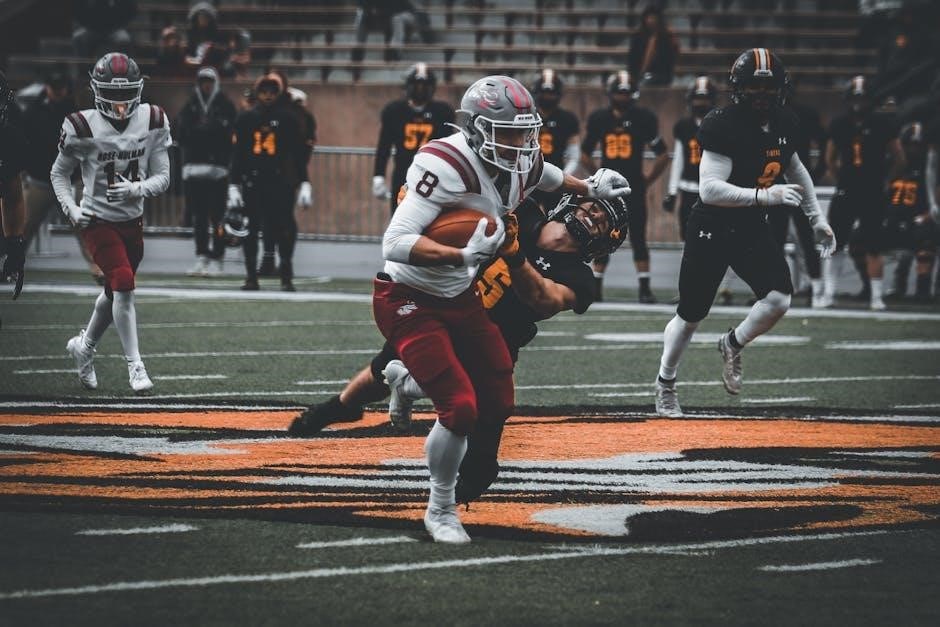
D1 College Football Workout Program PDF: A Comprehensive Plan
This detailed PDF outlines a rigorous 12-week training regimen, focusing on athletic performance enhancement.
It incorporates strength, conditioning, and recovery protocols,
designed for collegiate-level football athletes seeking peak physical condition.
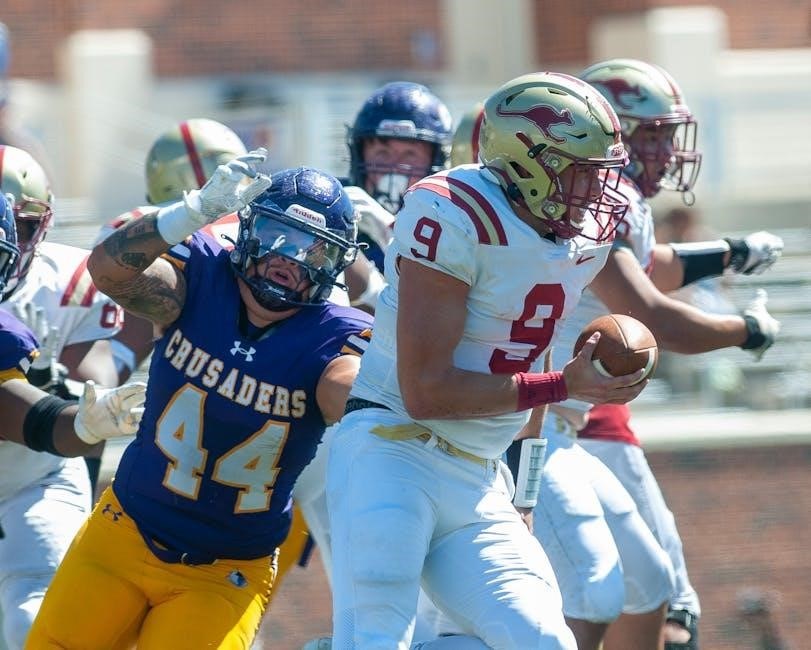
D1 football training represents the pinnacle of athletic preparation, demanding a holistic approach that extends far beyond traditional weightlifting. This program isn’t merely about building muscle; it’s about forging a complete athlete capable of enduring the relentless physical and mental demands of collegiate football. The focus is on developing explosive power, unwavering strength, and exceptional conditioning, all while minimizing the risk of injury.
Successful D1 programs prioritize a scientifically-backed methodology, integrating strength training with sport-specific drills and meticulous recovery strategies. Athletes will encounter a demanding schedule, requiring discipline, dedication, and a commitment to maximizing their potential. This PDF serves as a blueprint for achieving those goals, providing a structured pathway to enhance performance on the field. It’s a commitment to excellence, pushing boundaries, and achieving peak athletic form.
Program Overview & Goals
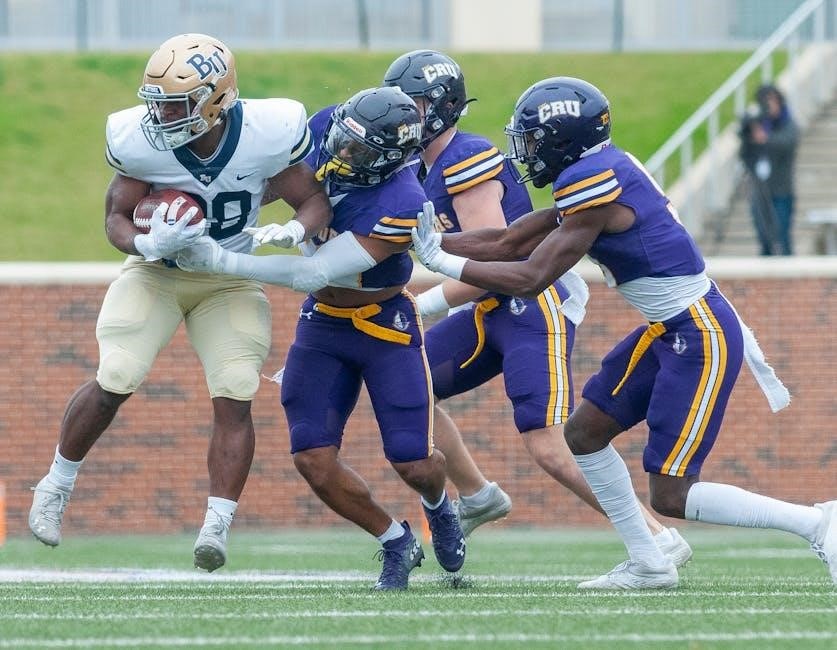
This D1 football workout program is a comprehensive 12-week plan designed to elevate athletic performance across all positions. The primary goal is to enhance strength, power, speed, agility, and endurance – crucial components for success at the collegiate level. It’s structured around a periodized approach, progressively increasing intensity and volume to optimize gains and prevent plateaus.
Key objectives include improving maximal strength through compound lifts like squats and bench press, developing explosive power with plyometrics, and enhancing conditioning with sprint work. The program also emphasizes injury prevention through targeted mobility and stability exercises. Ultimately, this regimen aims to prepare athletes for the physical rigors of a full season, maximizing their potential and contributing to team success. Consistent adherence and proper technique are paramount.
Duration of the Program (Typically 12 Weeks)
The D1 college football workout program is strategically structured over a 12-week period, divided into phases to optimize athletic development. The initial phase (weeks 1-4) focuses on building a foundational base of strength and conditioning, emphasizing proper form and technique. Weeks 5-8 represent a hypertrophy phase, increasing muscle mass and power through higher volume training.
The final phase (weeks 9-12) prioritizes peaking performance, reducing volume and increasing intensity to maximize strength and speed for the upcoming season. This periodization ensures athletes are prepared for the demands of competition. Regular assessments and adjustments are incorporated throughout the program to monitor progress and address individual needs. Consistent commitment throughout these 12 weeks is vital for achieving optimal results.
Strength Training Components
Core lifts like barbell bench press, rows, and squats form the foundation, complemented by accessory exercises such as dumbbell shrugs.
These build essential strength and power for football performance.
Barbell Bench Press: The Foundation
The barbell bench press is undeniably the cornerstone of a D1 football strength program, serving as the primary exercise for developing upper body pushing power. This movement directly translates to improved performance on the field, enhancing a player’s ability to block, tackle, and generate force. It’s often considered the “go-to” exercise for building a substantial chest.
Proper technique is paramount; athletes should focus on controlled descent and explosive ascent. Weight selection should challenge the athlete while maintaining impeccable form. Variations, such as incorporating different grip widths, can target specific muscle fibers. The bench press isn’t just about raw strength; it’s about building a stable and powerful base for all other upper body movements. Consistent progression, coupled with adequate recovery, is key to maximizing gains and minimizing the risk of injury. This foundational lift sets the stage for more complex and specialized strength training exercises.
Incline Bench Press: Upper Chest Development
Often overlooked in favor of the flat bench press, the incline variation is crucial for developing a well-rounded and powerful upper chest. This targeted approach addresses a common weakness in many athletes, contributing to a more balanced physique and improved functional strength. A strong upper chest enhances a player’s ability to drive upwards, whether it’s during blocking assignments or shedding tackles.
The incline angle (typically between 30-45 degrees) shifts the emphasis to the clavicular head of the pectoralis major. Proper form involves maintaining a slight arch in the back and controlling the descent of the barbell. Like the flat bench, progressive overload is essential for continued gains. Integrating incline bench press into the program alongside flat bench ensures comprehensive chest development, leading to greater overall upper body power and resilience. Don’t ignore this vital component!
Barbell Row: Building Back Strength
The barbell row is a cornerstone exercise for developing a robust and powerful back, essential for football players. A strong back isn’t just about aesthetics; it’s fundamental for maintaining proper posture, absorbing contact, and generating force in various movements on the field. This compound lift engages numerous muscle groups, including the latissimus dorsi, rhomboids, and trapezius, contributing to overall upper body strength and stability.
Maintaining a flat back and controlled movement throughout the exercise is paramount to prevent injury. Focus on pulling the barbell towards the lower abdomen, squeezing the shoulder blades together. Progressive overload, increasing weight or repetitions over time, is key to continued progress. Incorporating barbell rows into the D1 program ensures athletes develop the back strength needed to excel in their positions and withstand the physical demands of the game.
Dumbbell Shrug: Trap Muscle Emphasis
The dumbbell shrug is a targeted exercise specifically designed to strengthen the trapezius muscles – often overlooked, yet crucial for football players. Strong traps contribute to neck stability, shoulder support, and overall upper back power, aiding in tackling, blocking, and resisting forces. This exercise involves lifting the dumbbells straight up towards the ears, focusing on contracting the traps at the peak of the movement.

Proper form is vital; avoid rolling the shoulders or using momentum. Controlled, deliberate shrugs maximize muscle activation and minimize injury risk. Consistent inclusion of dumbbell shrugs in the D1 program builds resilient traps, enhancing an athlete’s ability to absorb impact and maintain structural integrity during intense gameplay. Shrug, shrug, and shrug some more to build those traps!
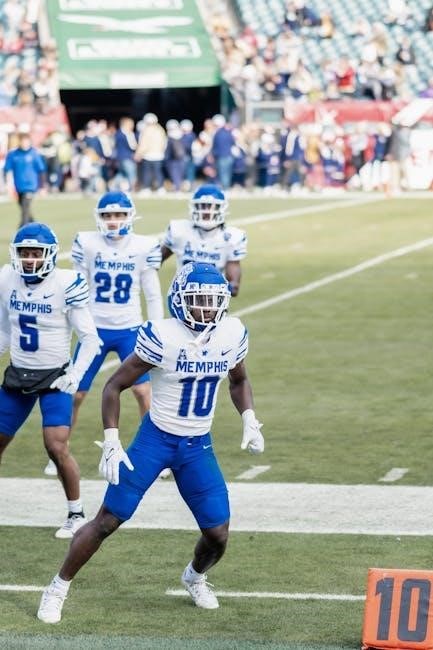
Workout Schedule Breakdown
The weekly schedule strategically balances intense training with crucial recovery periods. It includes dedicated lift days, gameday preparation, and mandatory NCAA off days for optimal athlete conditioning.
Saturday: Gameday Preparation
Saturday is dedicated to preparing athletes for the physical demands of a football game. This isn’t a heavy lifting day, but rather a focus on activation and ensuring the body is primed for peak performance. The emphasis shifts towards dynamic movements and light conditioning to enhance explosiveness and agility on the field.
Prior to the game, players engage in a comprehensive warm-up routine, focusing on sport-specific movements. This is followed by lighter activities designed to maintain muscle readiness without causing fatigue. The goal is to arrive at gameday feeling fresh, focused, and physically prepared to execute their roles effectively. Recovery protocols begin immediately post-game, setting the stage for Sunday’s recovery lift.
Sunday: Post-Game Recovery & Lift
Sunday’s session is strategically designed for post-game recovery and active restoration. It begins with a thorough warm-up to increase blood flow and reduce muscle soreness accumulated during Saturday’s game. The lifting portion focuses on rebuilding strength and addressing muscle imbalances created by the week’s activities.
The workout includes Squats (4×8 @ 50% Max), Pull-Ups (4x Bodyweight), Close-Grip Bench Press (4x @ 185-225lbs), and a Shoulder Complex (3×6). Isolation work on Quads/Hamstrings (3×12) and a 10-minute Abs & Back routine are also incorporated. Conditioning consists of 12 x 100-Yard Sprints (75% Max Speed). This blend of strength and conditioning aids recovery while preparing the body for the upcoming week’s training;
Warm-Up Routine
A comprehensive warm-up is paramount before any lifting session, especially post-game on Sunday. This routine prioritizes increasing core body temperature, enhancing joint mobility, and activating key muscle groups. It begins with 5-10 minutes of light cardio, such as jogging or cycling, to elevate heart rate and blood flow.
Dynamic stretching follows, including arm circles, leg swings, torso twists, and walking lunges. These movements prepare muscles for the demands of the workout. Specific activation exercises targeting the glutes, shoulders, and core are also included. The goal is to prime the neuromuscular system, improving performance and reducing the risk of injury during the subsequent strength and conditioning exercises.
Squats: Power & Leg Strength (4×8 @ 50% Max)
Squats are a cornerstone of the D1 football strength program, building lower body power and overall athleticism. This exercise targets the quads, hamstrings, and glutes – crucial muscle groups for explosive movements on the field. The prescribed protocol is 4 sets of 8 repetitions using 50% of the athlete’s one-repetition maximum (1RM).
This percentage allows for sufficient volume to stimulate muscle growth and strength gains while minimizing the risk of injury, particularly after a game. Proper form is essential; athletes should maintain a neutral spine, controlled descent, and explosive ascent. Squats translate directly to improved sprinting, jumping, and blocking ability, making them indispensable for football performance.
Pull-Ups: Upper Body Pulling Power (4x Bodyweight)
Pull-ups are a fundamental exercise for developing upper body pulling strength, vital for football positions requiring grappling, blocking, and tackling. The D1 program specifies 4 sets performed to complete failure using bodyweight as resistance. This challenges the latissimus dorsi, biceps, and forearms, enhancing functional strength.
Athletes unable to perform full pull-ups should utilize assisted variations, such as band-assisted pull-ups, to maintain proper form and build strength progressively. Emphasis is placed on controlled movements, avoiding momentum, and achieving a full range of motion. Pull-ups contribute to improved posture, shoulder stability, and overall upper body power, directly impacting on-field performance.
Close-Grip Bench Press: Triceps & Chest (4x @ 185-225lbs)
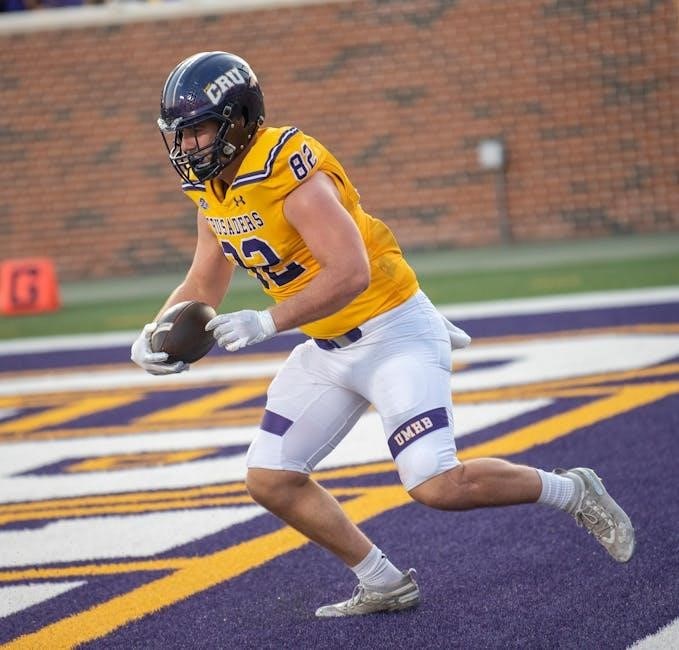
The close-grip bench press is a key component, targeting the triceps and inner pectoral muscles, crucial for explosive upper body power in football. The D1 program prescribes 4 sets utilizing a weight range of 185-225lbs, adjusted to ensure proper form and elicit muscle soreness. This exercise enhances lockout strength, vital for blocking and tackling, while also contributing to overall chest development.
Athletes should focus on maintaining a controlled descent and explosive ascent, keeping elbows tucked close to the body. Proper technique minimizes shoulder stress and maximizes triceps activation. The weight selection should challenge the athlete without compromising form, prioritizing quality repetitions over sheer weight lifted. This builds functional strength and power.
Shoulder Complex: Comprehensive Shoulder Work (3×6)
The shoulder complex is a crucial element, designed to build robust and resilient shoulder strength, essential for withstanding the demands of football. This D1 program incorporates a series of exercises – Bent Over Flys, Side Raises, Front Raises, Hi-Rows, and Bicep to Military Press – performed as a circuit for 3 sets of 6 repetitions each. Utilizing a lighter weight (5-10lbs suggested) prioritizes form and muscular endurance.
This comprehensive approach targets all aspects of shoulder functionality, improving stability, mobility, and power. Proper execution minimizes injury risk and enhances performance on the field. Athletes should focus on controlled movements and full range of motion, ensuring proper muscle activation throughout the complex. This builds balanced shoulder strength.
Quad/Hamstring Machines: Isolation & Balance (3×12)
Following the compound lifts, the D1 football program incorporates isolation work for the quadriceps and hamstrings using dedicated machines. Athletes will perform 3 sets of 12 repetitions on each machine, utilizing a lighter weight to emphasize muscular endurance and proper form. This phase focuses on addressing any muscle imbalances and strengthening supporting muscles around the knee joint.
This targeted approach is crucial for injury prevention and maximizing lower body power. Concentrating on controlled movements ensures optimal muscle activation and minimizes stress on the joints. The goal isn’t maximal weight, but rather achieving a full range of motion and a strong muscle contraction with each repetition, fostering balanced leg strength.
Abs & Back: Core Stability (10 minutes)
Dedicated core work is a vital component of the D1 football workout, allocated approximately 10 minutes on Sunday lifts. This segment emphasizes both abdominal and lower back strength to enhance overall stability and power transfer during athletic movements. The routine incorporates a mix of isometric and isokinetic exercises, focusing on maintaining proper spinal alignment and engaging deep core muscles.
Exercises may include planks, Russian twists, back extensions, and stability ball variations. The emphasis is on controlled movements and maintaining a neutral spine throughout each exercise. A strong core acts as a foundation for all athletic activities, improving balance, reducing injury risk, and maximizing force production on the field.
Conditioning: 12 x 100-Yard Sprints (75% Max Speed)
The conditioning component of the D1 football program culminates in a demanding sprint workout: 12 repetitions of 100-yard dashes, executed at 75% of maximum speed. This isn’t about all-out effort, but rather building speed endurance and refining running mechanics under fatigue. Adequate rest between sprints is crucial for maintaining form and preventing injury – typically allowing for full recovery before the next repetition.
This drill directly translates to game-day demands, simulating the repeated bursts of speed required from football players. Proper warm-up and cool-down are essential, alongside focusing on acceleration, top-end speed, and deceleration techniques. This conditioning element is designed to improve cardiovascular fitness and enhance the athlete’s ability to perform at a high level throughout an entire game.
Monday: Mandatory NCAA Off Day
The D1 football program adheres to NCAA regulations, designating Monday as a mandatory off day for all players. This isn’t simply a day without structured training; it’s a critical component of the overall recovery strategy. While formal workouts are prohibited, players are often encouraged – and sometimes required – to engage in active recovery, such as light stretching, foam rolling, or low-intensity cardio, to promote blood flow and reduce muscle soreness.
Monday also provides dedicated time for film study, allowing athletes to analyze their performance and prepare for upcoming opponents. Furthermore, it’s a crucial opportunity for rehabilitation and treatment of any existing injuries, ensuring players return to the field healthy and prepared. This structured rest period is vital for preventing overtraining and maximizing long-term athletic development.
Tuesday & Subsequent Training Days
Training integrates seamlessly with on-field practice, prioritizing compound lifts for strength gains. Accessory exercises balance muscle development,
ensuring comprehensive athletic conditioning and injury prevention.
Tuesday Lift (Integrated with Practice)
The Tuesday lift is strategically scheduled to complement the week’s practice demands, acknowledging the NCAA’s mandatory off-day on Monday for film study and rehabilitation. This session isn’t isolated; it’s a vital component of a holistic training approach. The focus remains firmly on maximizing strength and power development while minimizing fatigue that could hinder performance on the field.
Expect a dynamic workout incorporating foundational movements. Compound lifts take precedence, building a robust base of strength. This isn’t simply about lifting heavy; it’s about functional strength directly transferable to football-specific actions. The intensity is carefully modulated to allow for adequate recovery, recognizing the cumulative stress of practice and conditioning. Accessory work is then implemented to address muscle imbalances and enhance overall athleticism, ensuring a well-rounded and resilient athlete.
This integrated approach ensures that the weight room work directly supports and enhances the skills honed during practice, creating a synergistic effect for optimal athletic development.
Focus on Compound Lifts
The cornerstone of a D1 football strength program is a relentless emphasis on compound lifts. These multi-joint movements – squats, bench press, rows, and their variations – are paramount for building overall strength, power, and muscle mass. They mimic the demands of the game, requiring coordinated effort from multiple muscle groups simultaneously, enhancing functional athleticism.
Unlike isolation exercises, compound lifts stimulate a greater hormonal response, crucial for muscle growth and recovery. The program prioritizes these movements, allocating significant training volume to maximize their benefits. Proper form is non-negotiable; technique takes precedence over weight, minimizing injury risk and maximizing effectiveness.
These lifts aren’t just about brute strength; they’re about developing the explosive power needed to dominate on the field. The program strategically incorporates variations to target different muscle fibers and prevent plateaus, ensuring continuous progress.
Accessory Exercises for Muscle Balance
While compound lifts form the foundation, a comprehensive D1 football program recognizes the vital role of accessory exercises. These targeted movements address muscle imbalances, strengthen supporting muscles, and enhance overall athleticism. They prevent weaknesses that could lead to injury and optimize performance by ensuring all muscle groups contribute effectively.
Accessory work includes exercises like dumbbell shrugs for trap development, shoulder complexes targeting all deltoid heads, and isolation movements for quads and hamstrings. These aren’t about building massive size, but about reinforcing proper movement patterns and addressing individual needs.
Core stability work, including isometric and isokinetic abdominal exercises, is also crucial. A strong core translates to improved power transfer and injury resilience. The program integrates these exercises strategically, complementing the compound lifts and fostering a well-rounded physique.
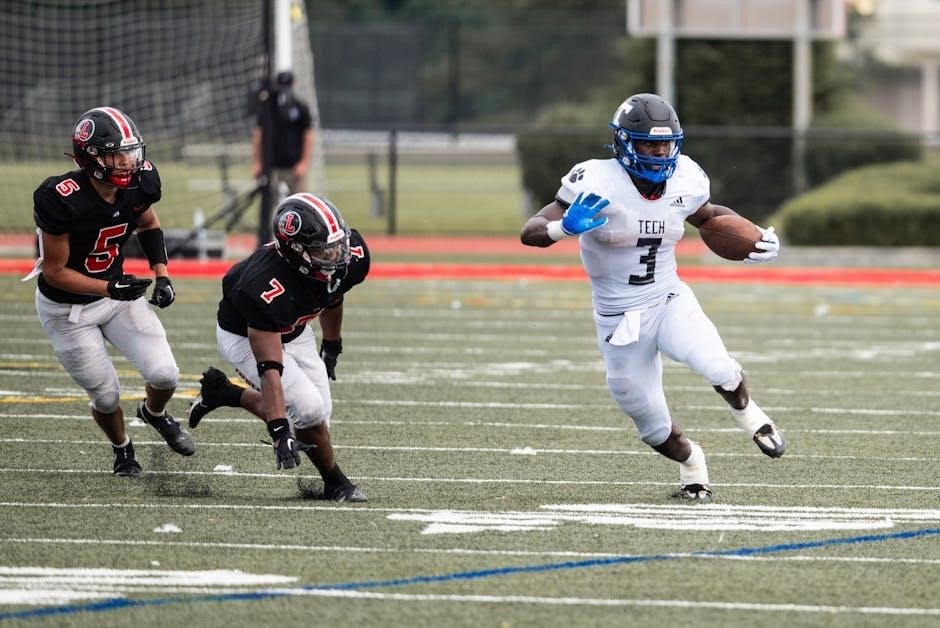
Program Considerations
Adaptations are crucial for beginners, prioritizing proper form over weight. Nutrition, hydration, sleep, and stretching are vital for recovery,
while injury prevention protocols minimize risk during intense training.
Beginner Level Adaptations
For athletes new to this intensity, scaling the program is essential. Initially, reduce the volume – fewer sets and repetitions – to allow the body to adapt. Focus on mastering proper technique with lighter weights before increasing the load. Instead of aiming for the prescribed percentages of maximum lift (like 50%), begin with a weight that allows for controlled movements throughout the entire range of motion.
Consider substituting complex exercises with simpler variations. For example, replace barbell squats with bodyweight squats or goblet squats. Pull-ups can be modified with assisted pull-up machines or resistance bands. Prioritize building a foundational level of strength and stability before progressing to more advanced movements. Gradually increase the intensity and volume over several weeks, monitoring for signs of overtraining or fatigue. Remember, consistency and proper form are more important than lifting heavy weights early on.
Importance of Proper Form
Maintaining impeccable form is paramount throughout this D1 football program. Incorrect technique dramatically increases the risk of injury and diminishes the effectiveness of each exercise. Prioritize controlled movements over lifting maximal weight; a slight reduction in load to ensure proper form is always advisable. Focus on engaging the correct muscle groups and maintaining a neutral spine during all lifts.
Seek guidance from qualified strength and conditioning coaches to learn and refine proper technique. Video recording and self-assessment can also be valuable tools. Pay close attention to cues regarding body positioning, breathing, and movement patterns. Never sacrifice form for ego or the desire to lift heavier. Consistent attention to detail will build a solid foundation for long-term athletic development and minimize the potential for setbacks due to injury.
Nutrition & Hydration Guidelines
Optimal nutrition and hydration are integral components of this D1 football training program. Athletes should prioritize a diet rich in lean proteins, complex carbohydrates, and healthy fats to fuel intense workouts and support muscle recovery. Caloric intake must be adjusted based on individual metabolic needs and training volume.
Hydration is equally critical; consistent fluid intake throughout the day, especially before, during, and after training, is essential. Water should be the primary source of hydration, supplemented with electrolytes as needed. Avoid sugary drinks and excessive caffeine. Strategic nutrient timing, including pre- and post-workout meals, can maximize performance and recovery. Consulting with a registered sports dietitian is highly recommended to develop a personalized nutrition plan.
Recovery Strategies (Sleep, Stretching)
Effective recovery is paramount for maximizing gains and preventing injuries within this D1 football program. Prioritize 7-9 hours of quality sleep each night to facilitate muscle repair and hormonal balance. Implement a consistent stretching routine, including both static and dynamic stretches, to improve flexibility and range of motion.
Active recovery methods, such as light cardio or foam rolling, can aid in reducing muscle soreness and promoting blood flow. Proper cool-down procedures following workouts are crucial. Consider incorporating techniques like contrast therapy (alternating hot and cold applications) and massage to accelerate recovery. Listen to your body and address any signs of overtraining promptly. Adequate rest days, like the mandatory NCAA off-day, are non-negotiable.
Injury Prevention Protocols
Proactive injury prevention is a cornerstone of this D1 football workout program. Thorough warm-up routines before each session are essential, preparing muscles and joints for the demands of training. Emphasize proper form during all exercises, seeking guidance from qualified coaches to avoid incorrect movements.
Progressive overload is key – gradually increasing intensity and volume to allow the body to adapt. Regular assessments of mobility and flexibility can identify potential weaknesses. Implement prehab exercises targeting common injury areas, such as shoulders, knees, and ankles. Listen attentively to your body; don’t push through pain. Promptly report any discomfort or injury to the athletic training staff for evaluation and treatment. Consistent adherence to these protocols minimizes risk.